I know you're like me because if you’re searching for a glute extensions workout, you probably want something very specific.
Not another random TikTok clip.
Not a vague “back day” routine.
A structured workout that actually targets your glutes, not just your lower back or hamstrings.
Let’s build exactly that.
This guide will show you:
- How to perform back extensions with proper form
- How to shift the emphasis to your gluteus maximus
- A complete glute-focused workout routine
- The best back extension alternatives if you don’t have the right piece of equipment
By the end, you’ll know how to make the hyperextension exercise work for your glutes, not against them.
The Structured Glute Extensions Workout
Here’s how to program this into a lower body workout routine that produces the best results.
Warm Up
- Glute bridges – 12 reps
- Quadruped hip extension – 10 reps per side
- Bodyweight good morning – 12 reps
These activate the primary muscles before loading the hyperextension exercise.
Main Workout
1. Barbell or Bodyweight Hip Thrust
3–4 sets of 8–10 reps
My personal foundation for glute growth! Hip thrusts build study glute strength.
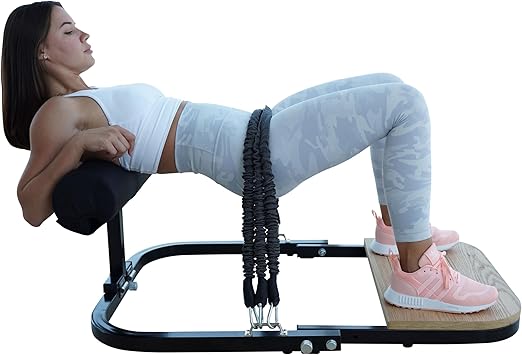
If you train at home, my best recommendation for you is the BootySprout hip thrust machine. It can make hip thrusts FAR more comfortable and easier to progressively overload for stronger glute development.
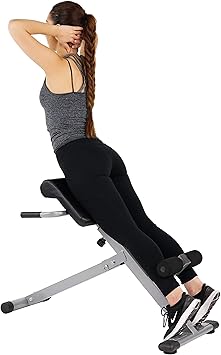
2. Glute-Focused Back Extensions
3 sets of 10–12 reps
Slow tempo. Hard squeeze at the top of the movement.
For at home glute workouts, a Roman chair or 45-degree back extension bench is one of the most versatile pieces of equipment for home gyms.
3. Romanian Deadlift
3 sets of 8–10 reps
I use two dumbbells for my RDLs! These reinforce the hip hinge mechanics and strengthens the lower body.
To make this target the glutes and not the hamstrings, bend at the knee and force your butt back... lowering the weight only until you feel the pull in your glutes.
Then quickly stand back straight and squeeze your glutes.
4. Bulgarian Split Squats
3 sets of 8–10 reps per leg
The GOAT of a glute extensions workout! Bulgarian split squats add unilateral strength and stability to make sure both glutes are targeted equally.
5. Kettlebell Swing (Optional Finisher)
3 sets of 15 reps
Kettlebell swings are one my favorite posterior chain exercises. These kettlebell swings introduce a dynamic movement with explosive hip extensions.
A high quality kettlebell is a staple for posterior chain strength and conditioning.
My budget friendly kettlebell is linked below!

What Makes a Glute Extensions Workout Actually "Glute Focused"?
Not all hyperextensions are created equal.
A true glute extensions workout is built around one goal: maximizing hip extension while minimizing lower back dominance.
That means every rep is:
- intentional
- controlled
- driven from the hips, not the spine.
Here’s what separates a glute-focused approach from a lower-back-heavy one:
1. Hip Hinge First, Spine Second
The movement should start by pushing the hips back, similar to a Romanian deadlift.
When the hips initiate the motion, the gluteus maximus becomes the prime mover.
2. Slight Posterior Pelvic Tilt at the Top
At full lockout, think about gently tucking your pelvis and squeezing your glutes hard.
That small adjustment shifts tension away from the erector spinae muscles and directly into the glutes.
Recommended post:
How To Grow Your Glutes Through Glute Activation
3. Controlled Tempo
Momentum kills glute activation. A slow 2–3 second lower and controlled drive upward keeps constant tension where you want it.
4. Intentional Mind–Muscle Connection
Instead of thinking “lift my chest,” think “drive my hips forward.” That cue alone can completely change which muscle groups dominate the exercise.
5. Smart Programming
A proper glute extensions workout does not stand alone.
It pairs best with hip thrusts, Romanian deadlifts, and unilateral movements so the posterior chain develops evenly.
When these elements are in place, back extensions stop feeling like a lower back exercise and start feeling like a serious glute builder.
Now let’s talk about why this movement can become one of the most effective glute exercises in your entire routine.
Why Back Extensions Can Be the Best Glute Exercise (When Done Correctly)
Most people think of back extensions as a lower back exercise.
Technically, yes, the erector spinae muscles and lower back muscles are involved. But when you adjust your starting position and body angle correctly, back extensions become a powerful hip extension movement that directly targets the gluteus maximus.
The key is understanding this:
Back extensions are really hip extensions.
When you hinge properly at the hips and keep tension in the lower body, the glutes become one of the primary muscles driving the movement.
That’s why many personal trainers program them alongside exercises like the hip thrust, Romanian deadlift, barbell deadlift, and even trap bar deadlift when building posterior chain strength.
When done correctly, this simple movement becomes a great exercise for glute growth.
How to Do Glute-Focused Back Extensions with Proper Form
Let’s break this down clearly.
1. Set Up the Starting Position
Adjust the pad so it sits just below your hip bones.
Your legs should be straight but not locked.
Cross your arms over your chest or hold a light plate once you progress.
The most important cue?
Slightly round your upper back and tuck your chin so your spine is neutral, not overextended.
Avoid a dramatic arch. A slight arch at the top is fine, but hyperextending through the lower back is not.
Your body should form a straight line from head to heel at the top of the movement.
2. Control the Range of Motion
Lower your torso by hinging at the hips, not bending through the spine.
Think about pushing your hips back like you would in a Romanian deadlift or good morning.
Lower until you feel a stretch in your glutes and hamstrings. That’s your bottom range of motion.
Then drive your hips forward and squeeze your gluteus maximus hard at the top of the movement.
Pause briefly at the top. Do not snap upward.
That squeeze is what shifts this from a lower back movement to a glute-building back extension exercise.
Recommended post:
The Best Creatine Gummies to Grow Your Glutes
3. Avoid These Common Glute Extensions Workout Mistakes
Most people turn this into a lower back movement by:
- Arching aggressively at the top
- Using momentum
- Moving too fast
- Letting the upper body lead
Keep the tension in your hips.
Move slowly.
Focus on hip extensions, not spinal bending.
How to Emphasize Glutes Over Hamstrings
If you feel exercises mostly in your hamstrings, adjust:
- Turn your toes slightly outward (this one my #1 tip that changed mine!)
- Think “hips forward” instead of “chest up”
- Reduce heavy weights and improve proper form
- Shorten the range of motion slightly
The gluteus maximus responds best when you control the movement and squeeze intentionally at the top.
Best Back Extension Alternatives
If you don’t have access to a hyperextension machine, here are effective substitutes:
- Stability ball hip extensions
- Yoga ball back extension exercise
- Quadruped hip extension
- Barbell deadlift
- Trap bar deadlift
All train similar muscle groups and reinforce hip hinge mechanics.
The stability ball and yoga ball options are especially helpful for beginners focusing on injury prevention and lower back control.
A high-quality durable stability ball is inexpensive and incredibly versatile for extension exercises and core work.

Where This Fits in Your Weekly Plan
Use this glute extensions workout 1–2 times per week as part of your lower body training.
Avoid doing it every day.
Remember to combine the hip extensions exercise with other popular exercises like hip thrusts, Romanian deadlifts, and split squats to maximize posterior chain strength.
Heavy weights are not required to see progress. Controlled reps and consistent overload lead to better results over time.
Injury Prevention and Lower Back Safety
Because back extensions involve the erector spinae muscles and lower back muscles, maintaining proper form is essential.
Keep these principles in mind:
- Neutral spine
- Controlled tempo
- No jerking
- No excessive arching
If you have a history of lower back pain, consult a healthcare provider or personal trainer before adding this hyperextension exercise.
These exercises should strengthen, not strain your lower back.
Why These Glute Extension Workout Exercises Work
The gluteus maximus is responsible for powerful hip extension.
When trained through controlled range of motion, especially at full hip lockout, the glute max grows stronger and more defined.
Back extensions allow you to train hip extensions without loading the spine as heavily as a barbell deadlift.
That makes it a great exercise for building glutes while managing spinal fatigue.
It’s simple. It’s effective. It works.
Real Talk Recap: Glute Extensions Workout
A glute extensions workout doesn’t need to be complicated.
It needs:
- Clear structure
- Proper form
- Intentional glute focus
- Progressive overload
Back extensions are one of the most underrated extension exercises when performed correctly.
Stop thinking of them as a lower back move.
Start treating them as a glute-building tool.
And when you combine them with hip thrusts, Romanian deadlifts, Bulgarian split squats, and dynamic movements like kettlebell swings, your entire lower body gets stronger.
Train with intention and precision.
Shift the focus fully onto your glutes.
Watch your strength and results follow.
Other Glute Growth Posts You'll Love:
xoxo,

Disclaimer: This content is for informational and educational purposes only and is not intended as medical advice. I am not a doctor. The information shared is based on research and personal experience, and individual results may vary. Always consult a qualified healthcare professional before starting any new health, fitness, or nutrition program.