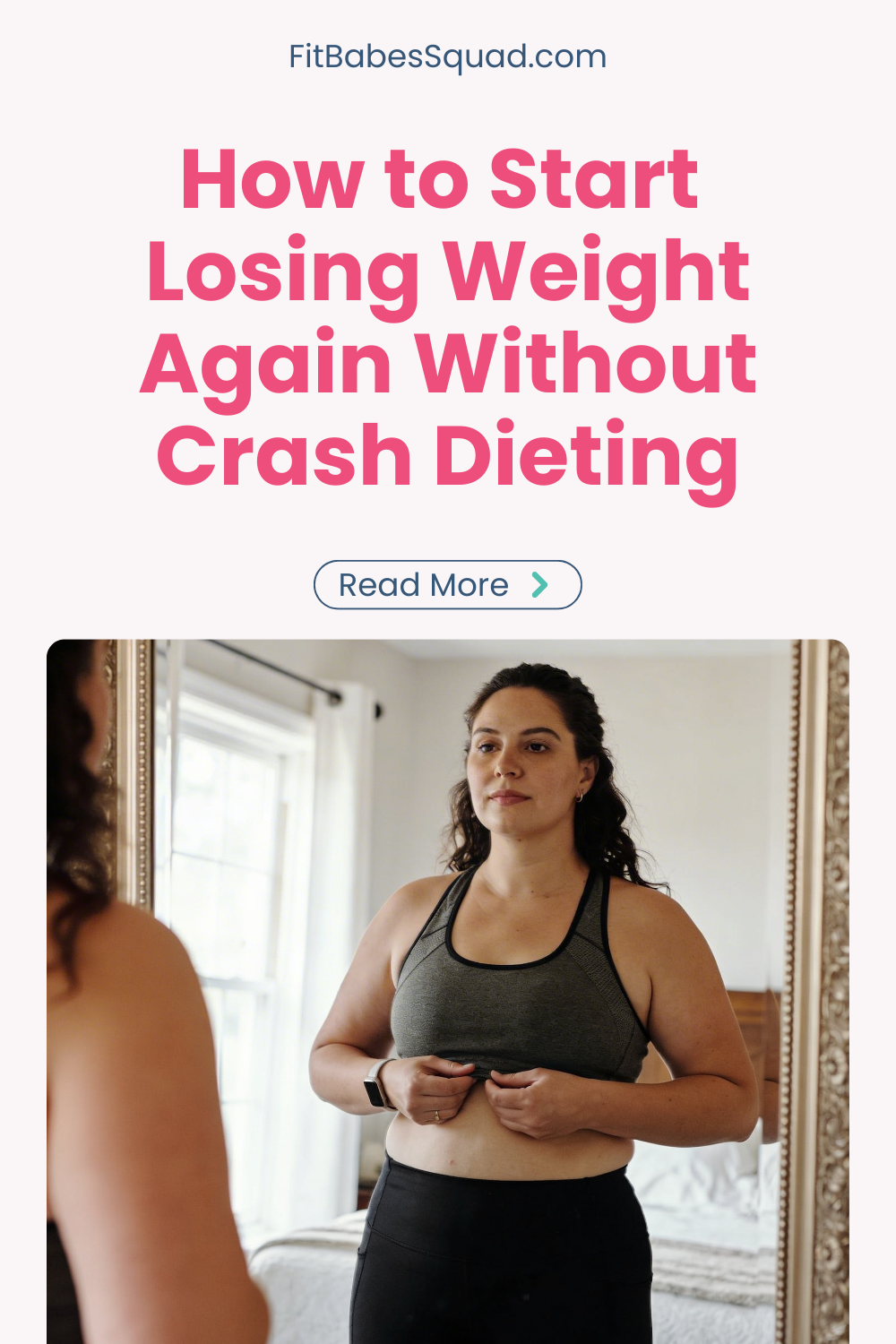
If you’re searching how to start losing weight again, I’m guessing one of two things happened. You either hit a weight loss plateau and the scale refuses to move, or you gained weight after previously losing a significant amount.
You’re trying to figure out how to start losing weight again without sliding back into crash diets, extreme calorie cuts, or something completely unsustainable.
Take a breath for a second.
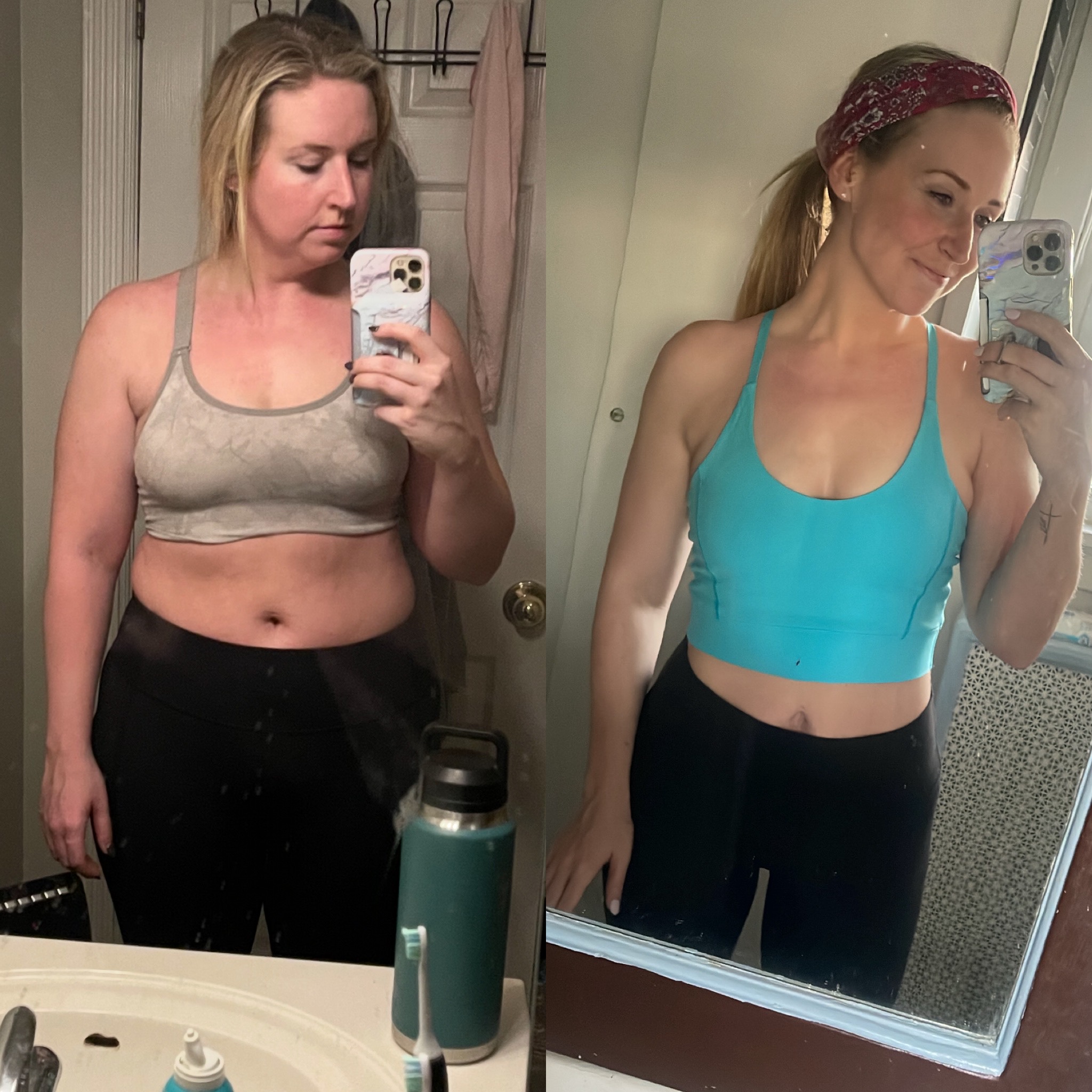
No matter which situation you’re in, you’re not failing. I've been in your shoes exactly (you'll see my before and after down in the post!). Plateaus and weight fluctuations are a normal part of almost every weight loss journey. What matters most right now is not reacting out of frustration, but choosing a smarter reset.
This next phase is not about panic or punishment. It’s about creating a sustainable plan that supports long-term fat loss, protects your metabolism, and improves your overall health.
Let’s walk through it step by step.
Why Weight Loss Stalls (And Why It’s Normal)
A weight-loss plateau happens when your body adapts. When you lose weight, your body burns fewer calories because:
- You weigh less.
- Your metabolic rate adjusts.
- Your lower calorie requirement changes.
That means the number of calories that once caused weight loss may now maintain your weight.
It’s not failure. It’s just biology.
Your body fights to maintain its "set point". Especially after losing a lot of weight over an extended time.
This is one of the most common reasons progress slows down.
6 Steps in How to Start Losing Weight Again
Step 1: Gently Reassess Your Caloric Intake
It can be triggering to stall. Our minds jump to "fix it now". But you don’t need extreme dieting. You need awareness.
Weight loss still comes down to consuming fewer calories than your body burns. But not drastically fewer calories.
Instead of jumping into a strict low-carb diet or cutting your food in half, try this:
- Recalculate your number of calories based on your current body weight.
- Look at portion size.
- Identify hidden extra calories from sugary drinks, fast food, or processed foods.
Small changes here can make a big difference.
For example:
- Swap sugary beverages for plain water
- Increase non-starchy vegetables
- Reduce mindless snacking (if you are a snacker, like me, switch to low calorie - high volume foods like cucumbers, watermelon, bell peppers, etc.)
If you need help tracking your caloric intake without obsessing, this is where MyFitnessPal can be helpful. It helps build awareness by acknowledging what's going into your body throughout the day.
Alongside MyFitnessPal, I personally recommend using a simple fitness tracker to monitor daily steps, movement, and activity trends. It helps you stay consistent without overcomplicating things.


Step 2: Focus on Strength Training (Not Just Cardio)
If you’ve been doing much cardio and not seeing results, this might be why.
Strength training helps preserve lean body mass and prevent loss of muscle mass, which is crucial for maintaining metabolic rate.
Muscle tissue burns more calories at rest than fat cells. If you lose muscle during dieting, your body burns less energy daily.
That makes weight management harder long term.
Add:
- 3–4 strength training sessions per week
- Progressive overload
- Compound movements
High-intensity interval training can be useful, but too much cardio can increase hunger and lead to less energy overall.
Balance matters. Find what works best for your body.
Step 3: Improve Sleep Before Cutting More Calories
This one surprises people.
Lack of sleep and sleep deprivation can stall healthy weight loss. When you don’t get enough sleep:
- Hunger hormones increase
- Blood sugar levels fluctuate
- Cravings rise
- Cortisol increases
- The body fights fat loss harder
Aim for 7–9 hours of sleep per night. Even improving by one hour can have a positive effect.
If sleep is an issue, focus on fixing this before cutting more food.
My sleep was affecting my weight loss and fitness journey, so I started taking magnesium glycinate and haven't looked back. I get 8 hours of deep sleep every night and it's one thing I can check off my body's "stress list".
 Pure Encapsulations Magnesium (Glycinate)
I take this every single night for the deepest sleep. I never wake up groggy like other sleep supplements aka melatonin.
Step 4: Tighten Up Eating Habits (Without Going Extreme)
Stay away from fad diets and popular diets that promise dramatic results in the first week.
Instead, focus on healthy habits like:
- Balanced diet with protein, fiber, healthy fats
- Reducing sugary drinks and processed foods
- Increasing non-starchy vegetables
- Watching portion size
- Choosing healthy foods on a regular basis
Highly restrictive plans often backfire because they’re not sustainable. Healthy ways to lose weight are slower, but they stick.
Recommended post:
How 75 Hard Changed My Life And Why You Should Try It
Step 5: Increase Routine Physical Activity
You don’t need to live in the gym. But routine physical activity matters.
That includes:
- Steps per day
- Walking after meals
- Routine physical activity throughout the week
- Strength training
- Moderate cardio
If your life circumstances changed.. new job, new baby, stress... your movement likely decreased. Find little ways to increase your steps each day.
A recent survey from weight maintenance studies like the National Weight Control Registry shows that people who maintain weight loss long term keep regular physical activity consistent.
Not extreme. Just consistent.
Step 6: Consider Professional Guidance If Needed
If you’re stuck despite doing everything right, it may be time to speak with:
- A registered dietitian
- A health care provider
- A qualified personal trainer
Especially if you have medical conditions, blood sugar issues, thyroid concerns, or other health risks.
Sustainable weight loss should never come at the expense of mental health or physical health.
What If You’ve Regained Extra Pounds?
Weight gain after initial success is incredibly common. I think it's happened to all of us. It doesn’t erase your progress.
Often it happens because:
- Lifestyle changes
- Stress
- Sleep changes
- Loss of structure
- Returning to old eating patterns
The solution isn’t punishment. It’s rebuilding the structure.
You know what got you to your goal, so go back to basics:
- Modest weight loss goals
- Balanced eating plan
- Regular strength training
- Enough sleep
- Small, consistent adjustments
The Mindset Shift That Changes Everything
The best approach isn’t dramatic. It’s repeatable. Long-term weight loss comes from:
- Sustainable calorie awareness
- Preserving lean body mass
- Supporting metabolic rate
- Building healthy habits
- Protecting mental health
Extreme dieting creates stress while sustainable lifestyle changes create results.
But there’s one more layer most people don’t consider.
The Hidden Factor: Stress, Hormones, and Why Your Body Resists Fat Loss
This is the part almost no one talks about when you hit a weight loss plateau.
Your body is not just a math equation. Yes, weight loss still requires fewer calories than your body burns.
But when you’ve been dieting for a long time, under-eating, overtraining, or dealing with major life circumstances, your body can start pushing back.
Let’s talk about why.
Don't know where to start?
Take the guess work out with the Beginner Gym Girl Guide!
Your Body Is Wired for Survival
When you reduce caloric intake for an extended time, your body senses a potential threat. It doesn’t know you’re trying to lose belly fat for summer. It just knows energy is lower than usual.
So it adapts.
• Your metabolic rate slows slightly
• You subconsciously move less
• Hunger hormones increase
• Cravings rise
• Energy drops
That’s not weakness. That’s just your body doing it's biology thing.
This is one reason why people who have lost a lot of weight often struggle with long-term weight management. The body fights to protect fat cells because it views fat as stored energy.
That doesn’t mean you can’t lose weight again. It just means your strategy needs to shift.
Chronic Stress Can Stall Healthy Weight Loss
As if we don't have enough stress in life, I'm the girl who stresses about the stress level affecting her fitness journey haha. Anyone else?
Stress plays a significant role in weight loss resistance. When stress is high, cortisol levels rise. Elevated cortisol over time can:
• Increase belly fat storage
• Disrupt blood sugar levels
• Increase appetite
• Interfere with sleep
• Reduce recovery from workouts
If you’ve been pushing harder and harder without seeing progress, it might not be a “try harder” problem.
It might be a “recover better” problem.
This is where enough sleep, stress management, and realistic weight loss goals become critical.
When sleep is consistently short, hunger and cravings tend to rise. That alone can affect appetite regulation and energy levels.
Aim for 7 to 9 hours of sleep per night. Protect your hours of sleep the same way you protect your workouts.
Sleep is not lazy. It’s strategic.
My Recovery Secret Duo:
 Pure Encapsulations Cortisol Calm
I absolutely love Pure Encapsulations. They're very quickly becoming one of my favorite pure supplement companies.
Pure Encapsulations Magnesium (Glycinate)
I take this every single night for the deepest sleep. I never wake up groggy like other sleep supplements aka melatonin.
Why Doing More Cardio Isn’t Always the Answer
When progress slows, lots of people add more cardio.
More classes.
More miles.
More sweat.
But if you’re already in a calorie deficit and you keep adding more, your body may respond by conserving energy elsewhere.
You might notice:
• Less spontaneous movement
• More fatigue
• More hunger
• Less energy throughout the day
Over time, too much cardio combined with too few calories can contribute to loss of muscle mass. And when muscle tissue decreases, metabolic rate can drop.
It's like a domino effect.
That’s why resistance training remains essential for maintaining muscle and keeping your metabolism supported over time.
Instead of adding more cardio, sometimes the better move is:
• Maintain your current routine
• Tighten up eating habits
• Improve sleep
• Reduce stress
Less chaos. More consistency.
Rebuilding Your Metabolic Rate the Smart Way
If you’ve been dieting hard for months, one of the healthiest ways to restart fat loss may actually be to take a short break from dieting.
That does not mean overeating.
It means:
• Eating at maintenance for a few weeks
• Focusing on balanced diet choices
• Prioritizing protein
• Supporting strength training
• Sleeping well
This helps restore metabolic rate and reduce the “diet fatigue” that builds up over time.
Then, when you return to a small calorie deficit, your body is more responsive. Just think about keeping your body "on it's toes". Once it regulates a new normal, a shift in that balance will make it respond.
This approach supports healthy weight loss and protects overall health rather than creating a cycle of crash diets and rebound weight gain.
Recommended post:
Fat Blasting Metabolic Exercises Every Woman Should Be Doing
The Psychological Side of Starting to Lose Weight Again
There’s another piece people don’t talk about.
Starting over can feel discouraging.
Maybe you gained extra pounds.
Maybe life circumstances threw off your routine.
Maybe your weight loss goals feel farther away now.
That can impact mental health more than we realize. And it's really hard. After I initially lost weight, I rebounded. Life challenges and being laxed on my food choices caught up to me. So believe me when I say, I've been in your shoes. I know what this feels like.
But here’s the truth: restarting is not failure.
It’s part of the process. And that's beautiful.
Long-term weight loss is rarely linear. The people who do succeed long term:
• Keep routine physical activity consistent (even if its a daily walk to get steps in)
• Maintain structured eating patterns
• Make small changes instead of extreme ones
• Focus on sustainable habits
They don’t panic when the scale stalls for a week. They adjust calmly and keep going. And I think that's something we can all learn from.
A Simple Reset Plan for the Next 14 Days
If you’re wondering what to actually do starting tomorrow, here’s a realistic two-week reset.
- Track your number of calories for awareness, not restriction.
- Replace sugary drinks with plain water.
- Increase non-starchy vegetables at lunch and dinner.
- Strength train 3 times per week.
- Walk daily or increase steps by 2,000.
- Aim for 7 to 9 hours of sleep.
- Avoid drastic overcorrections.
That’s it.
Not a total overhaul. And definitely not a punishment plan.
Just small changes that compound.
By the end of two weeks, you’ll likely notice:
• Less bloating
• More stable blood sugar levels
• Better energy
• Slight scale movement
• Improved mindset
And most importantly, momentum. That fire that got relit under your butt!
When to Consider Medical Support
If you’ve been struggling for a long time despite consistent effort, it may be worth speaking to a health care provider or registered dietitian.
Underlying medical conditions, hormonal shifts, or metabolic changes can influence weight management.
In some cases, structured weight-loss programs or medical supervision may be appropriate.
Healthy weight loss should never compromise overall health or increase health risks.
FAQ: How to Start Losing Weight Again
Why did I hit a weight loss plateau?
Your metabolic rate adjusts as you lose weight. As body weight drops, your body burns fewer calories. Reassessing your caloric intake and activity level (TDEE) can help restart progress.
Should I cut more calories immediately?
Not necessarily. Drastically reducing caloric intake can have the opposite affect by slowing metabolism and increasing hunger. Start with small changes and evaluate sleep, activity, and strength training first.
How long does a weight-loss plateau last?
It varies. Some plateaus last a few weeks, especially if your body is adjusting after losing a lot of weight. Focus on consistency during this phase.
Is a low-carb diet the best way to restart weight loss?
A low-carb diet can work for some people, but it’s not required. A balanced diet and calorie awareness are more important than cutting one macronutrient entirely.
How important is strength training for restarting weight loss?
Very. Strength training protects muscle tissue and lean body mass, which supports metabolic rate and long-term weight management.
Can lack of sleep cause weight gain?
Yes. Sleep deprivation affects hunger hormones and blood sugar levels, making fat loss more difficult.
Grab the Magnesium Glycinate I use, you won't be disappointed.
What if I’ve regained extra weight?
Weight fluctuations are normal. Restart with modest weight loss goals and healthy habits rather than extreme dieting.
When should I see a registered dietitian?
If you’re stuck long term, dealing with medical conditions, or unsure how to adjust your eating plan safely, a registered dietitian can provide individualized guidance.
Real Talk Recap: How to Start Losing Weight Again
If you’re trying to figure out how to start losing weight again, the answer isn’t hidden in a detox tea or a crash diet.
It’s in structure.
Daily structure.
A moderate calorie deficit.
Strength training.
Sleep.
Daily movement.
Balanced choices.
Nothing flashy. No fancy social media tricks. Just sustainable choices that you can keep doing repeatedly.
And that’s what actually works.
Other Beginner Fitness Posts You'll Love:
xoxo,

*Disclaimer: The suggestions provided in this blog post are for informational purposes only and should not be considered as a substitute for professional medical advice, diagnosis, or treatment. Always consult with a qualified healthcare provider before making any significant changes to your health and wellness routines. I am not a doctor and the information presented is based on research and personal experience. Individual results may vary, and any actions taken based on the information in this blog post are done at your own risk. It's essential to consult a healthcare expert for personalized guidance tailored to your specific health needs and circumstances. Your health and well-being should always be a top priority, and professional medical guidance is crucial for making informed decisions about your health.